
Reduces winter heat loss through ceilings
Up to 35 percent of heat escapes through an uninsulated ceiling. Batts fitted between ceiling joists slow this loss, keeping warmth inside where it belongs.
Collingwood
Bulk insulation traps still air in your ceiling, walls and floors to slow heat flow. In Collingwood’s older weatherboard and terrace homes, this is the most effective way to cut winter heat loss and summer heat gain through uninsulated spaces.
Share your details and Expert Insulation Melbourne will contact you about Bulk Insulation in Collingwood.
Bulk insulation uses materials like glasswool, polyester or rockwool batts to resist the flow of heat. In Collingwood, where many homes were built before insulation standards, adding batts to the ceiling and walls makes the biggest difference to comfort and energy use. It works by holding millions of tiny air pockets that slow conductive and convective heat transfer.
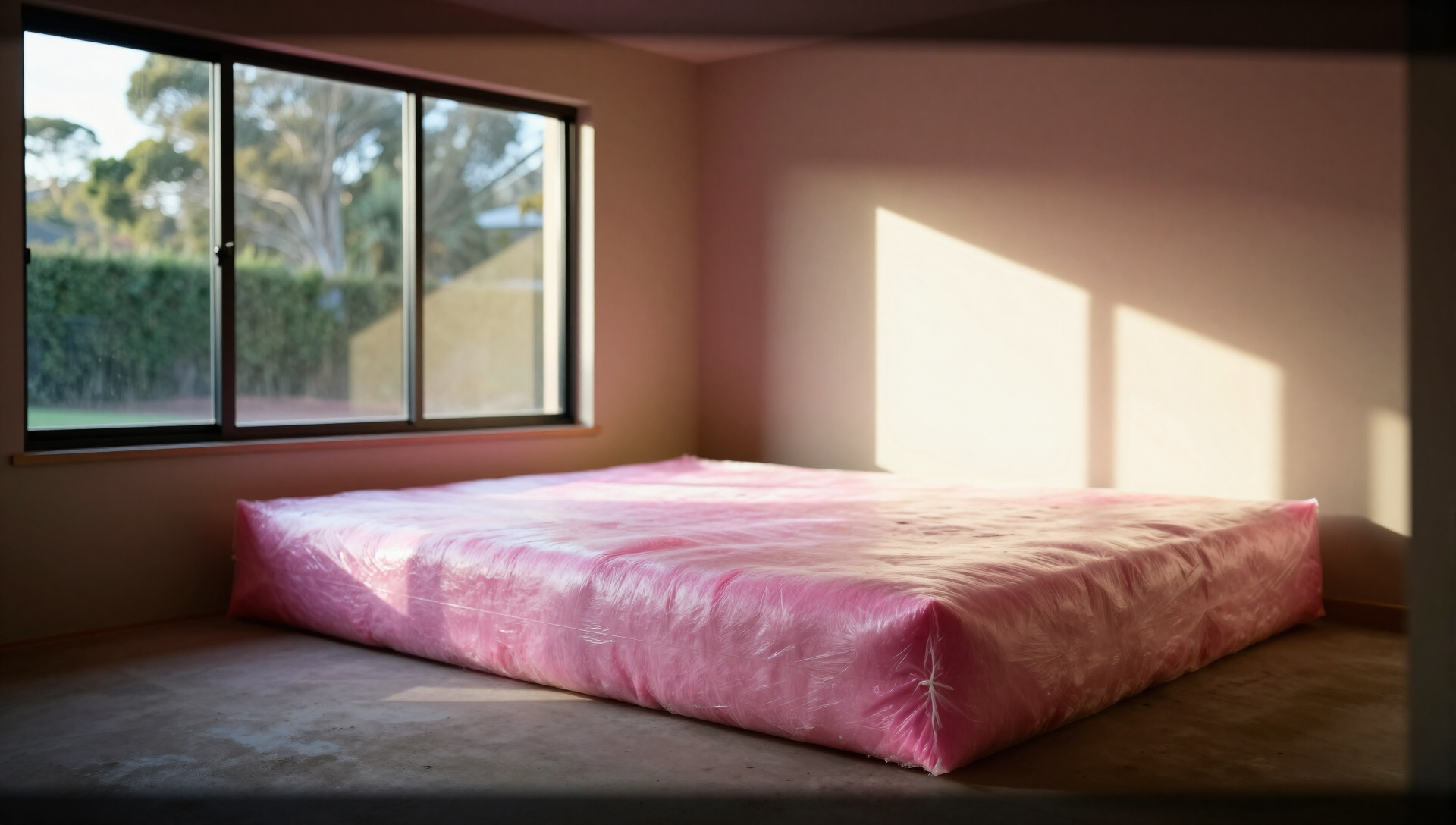
Collingwood’s mix of Victorian terraces and weatherboard cottages often have little to no insulation. Bulk batts address the main paths of heat loss and gain, delivering year-round comfort and lower running costs for heating and cooling.
Up to 35 percent of heat escapes through an uninsulated ceiling. Batts fitted between ceiling joists slow this loss, keeping warmth inside where it belongs.
On hot days, a dark roof can reach 70 degrees or more. Bulk insulation under the roof line buffers this heat, so it takes longer to transfer into living areas.
Dense batts absorb sound vibrations, reducing noise transfer through internal walls and between floors in multi-storey homes.
By reducing the workload on heaters and air conditioners, insulation pays for itself over time through lower electricity and gas usage.
Modern polyester batts are soft to handle and do not shed fibres, making installation cleaner and more comfortable for installers and occupants.
Batts are pre-cut to suit 450mm and 600mm centres, so they friction-fit without gaps. Custom widths are available for non-standard framing.
Every Collingwood home is different. We start with a roof space and subfloor inspection to check existing insulation, access, wiring and any obstacles. Then we plan the best product and R-value for your needs before installing with minimal disruption.
We check for existing batts, compression, moisture, rodent damage and electrical cables. If old insulation may contain asbestos, work stops until a qualified assessor inspects it.
Thin, compressed or wet batts are taken out and disposed of. Ceiling dust and debris are vacuumed to provide a clean surface for new material.
Batts are cut to size and placed snugly between ceiling joists, wall studs or floor joists. We maintain clearances around downlights, flues and other services as required.
We ensure no gaps remain at edges or around penetrations. All offcuts and packaging are removed, and the manhole is sealed to maintain the thermal envelope.
Collingwood’s inner-city location means many homes are single-fronted terraces or weatherboards with shared walls and small roof spaces. Bulk insulation is ideal for these properties because it can be retrofitted through the manhole without major renovations. Ceiling batts reduce heat loss through the roof, while wall batts can be added during renovations or by removing internal linings where accessible.
We install glasswool and polyester batts in Collingwood ceilings, walls and floors to improve thermal performance in older homes.
Homeowners in Collingwood often ask about the best R-value, whether their home is suitable and how long installation takes. Here are the key details.
Bulk insulation in Collingwood addresses the primary cause of energy waste in older homes: uninsulated ceilings, walls and floors. In Melbourne’s climate, heat flows from warm areas to cold, so in winter warmth escapes upwards through the roof, and in summer radiant heat from the roof penetrates down into living spaces. Batts made from glasswool, polyester or rockwool resist this flow by trapping still air within their fibres.
For Collingwood terraces and weatherboards, ceiling insulation is the first priority because the roof space offers the largest uninsulated area. Typical ceiling R-values for Melbourne range from R4.0 to R6.0, with higher values providing better performance in extreme cold or heat. Walls are commonly insulated to R2.0 to R2.7, and underfloor batts from R1.5 to R2.5 help prevent cold floors and draughts in suspended timber floors.
The cost of bulk insulation in Collingwood depends on the area to be covered, the chosen R-value, access difficulty and whether old material needs removal. Most ceiling installations in a standard three-bedroom home take half a day to a full day, with minimal disruption. Wall insulation is usually done during renovations when linings are off, or in accessible cavities via small openings that are patched afterwards.
Reduce heat loss and summer heat gain in your Collingwood home with bulk insulation. We supply and install glasswool and polyester batts for ceilings, walls and floors.